

1. You Chose This Life

You were not placed here by accident or sentenced by circumstance. Before incarnation, you selected the general conditions of this life—your family line, body, culture, and era. These parameters create contrast and texture for the experience. They are the board you chose to play on, not evidence of worth or failure.
2. Forgetting Is Part of the Design
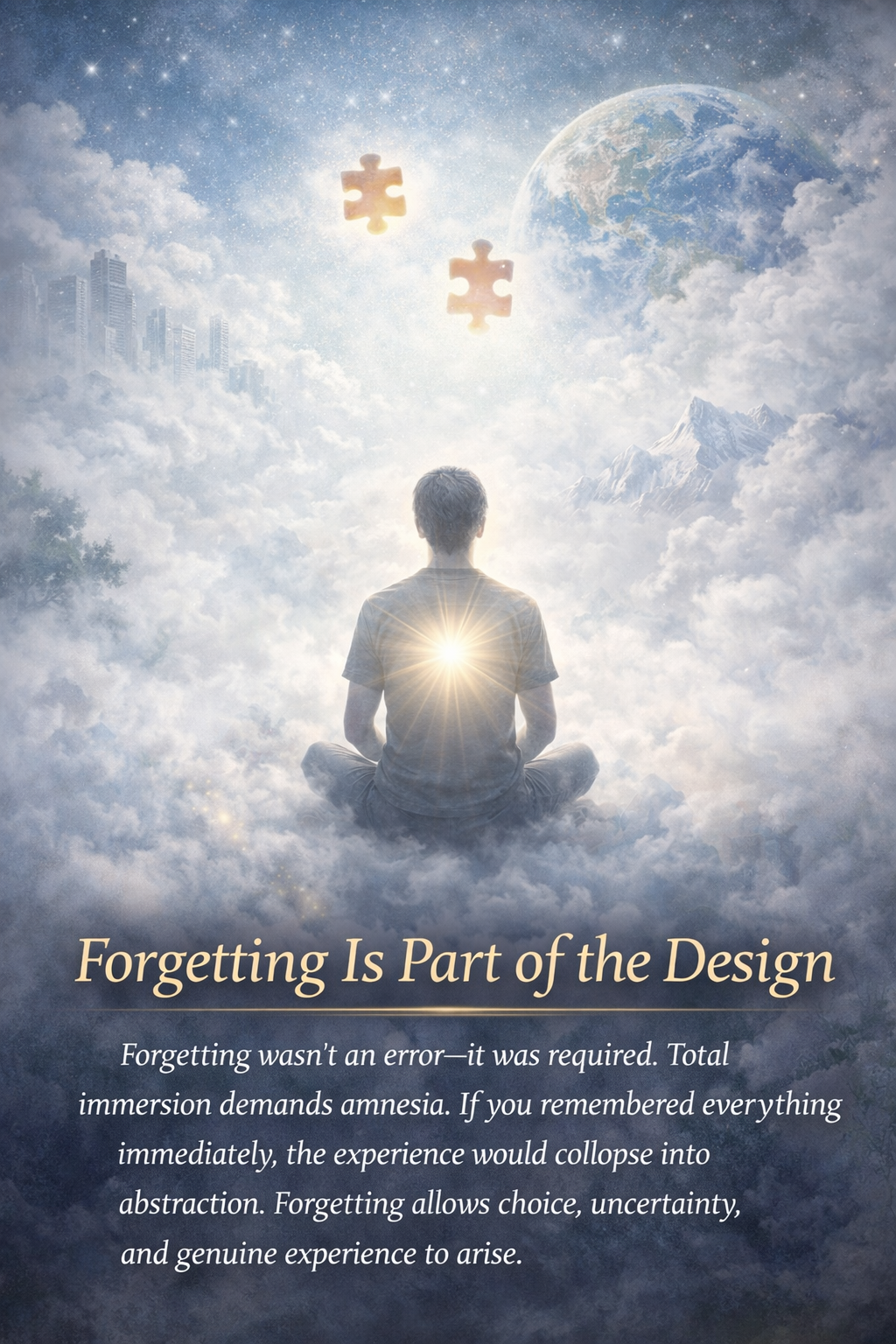
Forgetting wasn’t an error—it was required. Total immersion demands amnesia. If you remembered everything immediately, the experience would collapse into abstraction. Forgetting allows choice, uncertainty, and genuine experience to arise.
3. This Is Not a School

You did not come here to learn love or earn value. A school assumes lack. You already know love at the deepest level. This realm exists so you can remember it through contrast, not be taught it through correction.
4. Fear Is a Mechanism, Not the Enemy
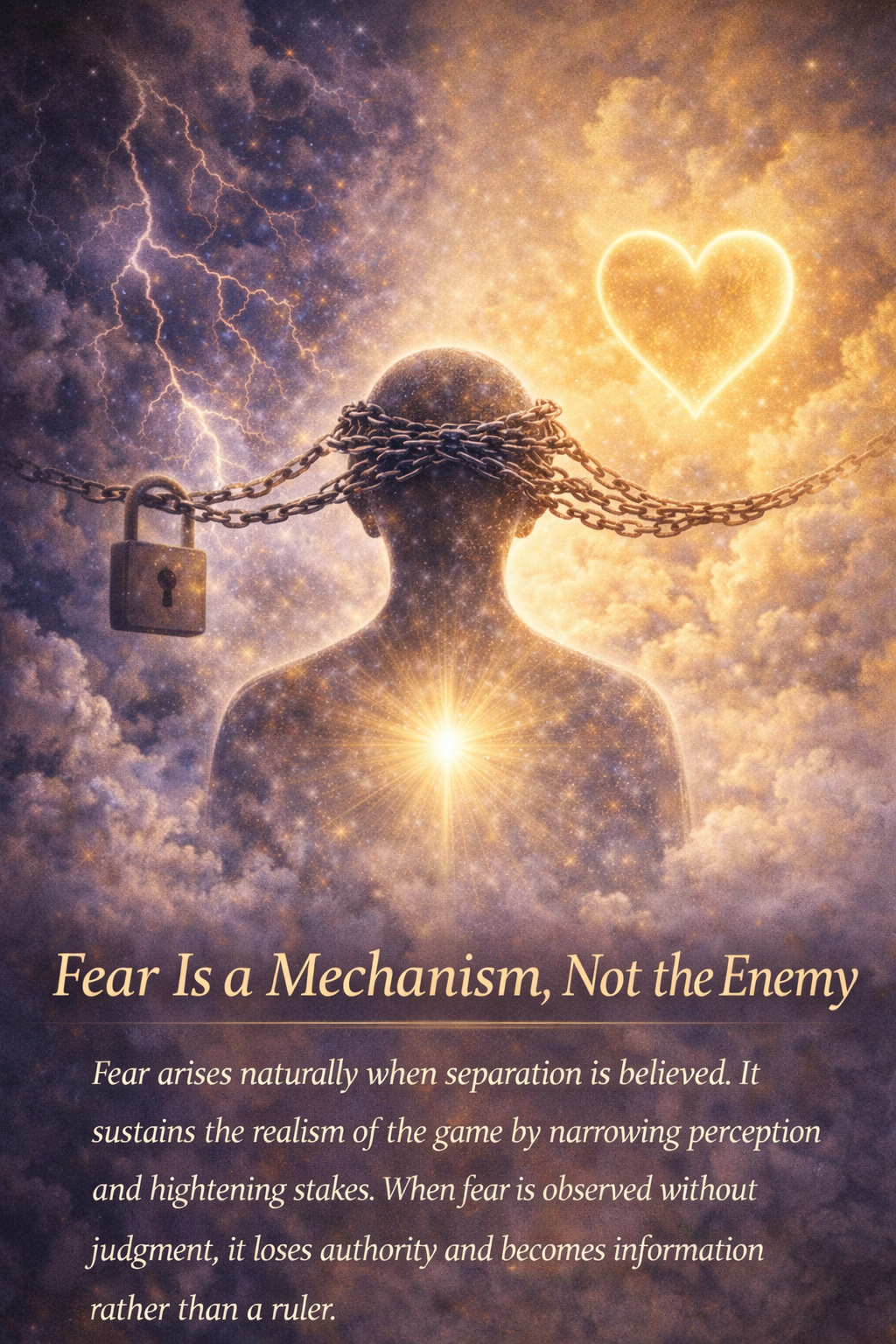
Fear arises naturally when separation is believed. It sustains the realism of the game by narrowing perception and heightening stakes. When fear is observed without judgment, it loses authority and becomes information rather than a ruler.
5. Identity Is a Costume
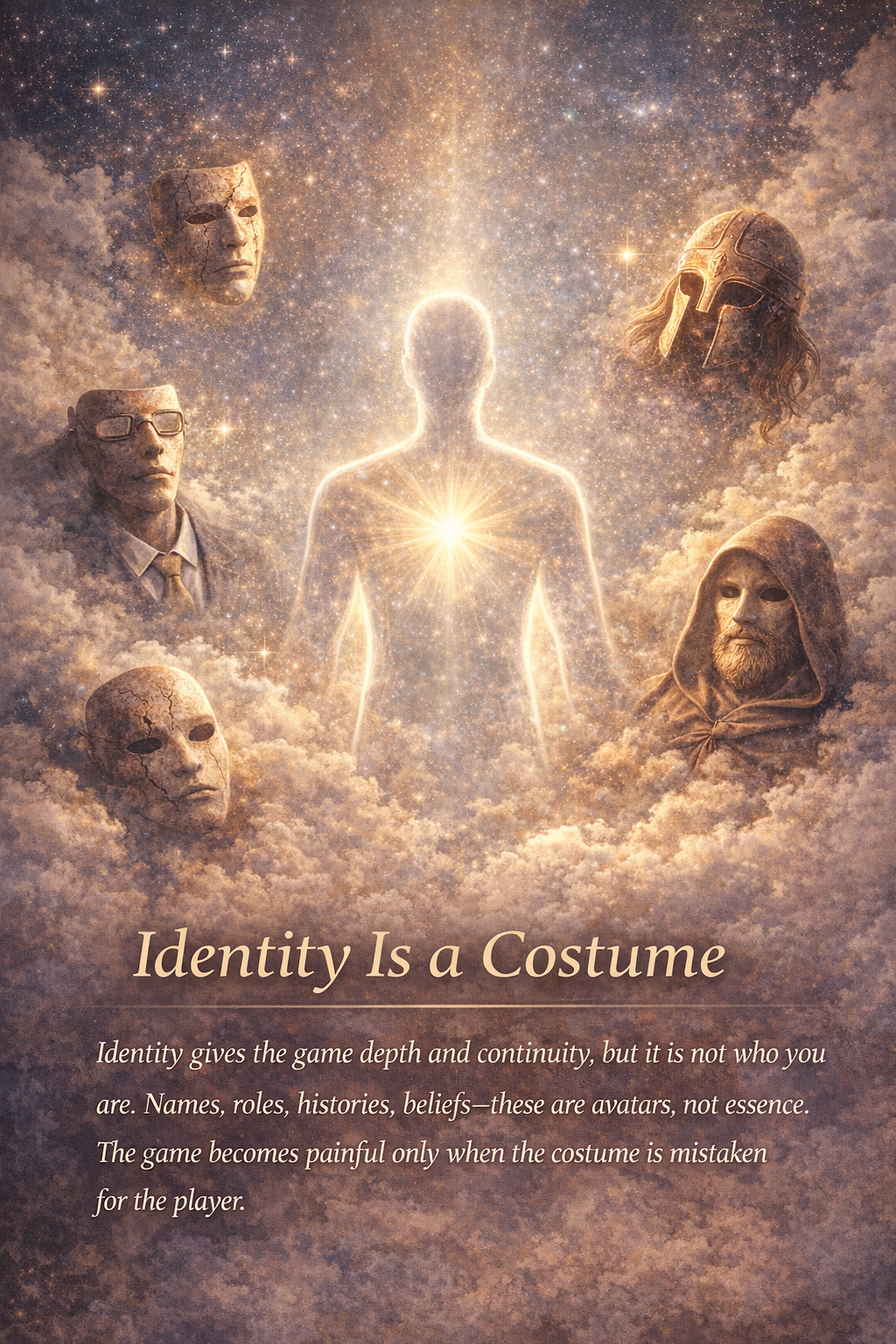
Identity gives the game depth and continuity, but it is not who you are. Names, roles, histories, beliefs—these are avatars, not essence. The game becomes painful only when the costume is mistaken for the player.
6. Creation Is Restricted—Until It Isn’t
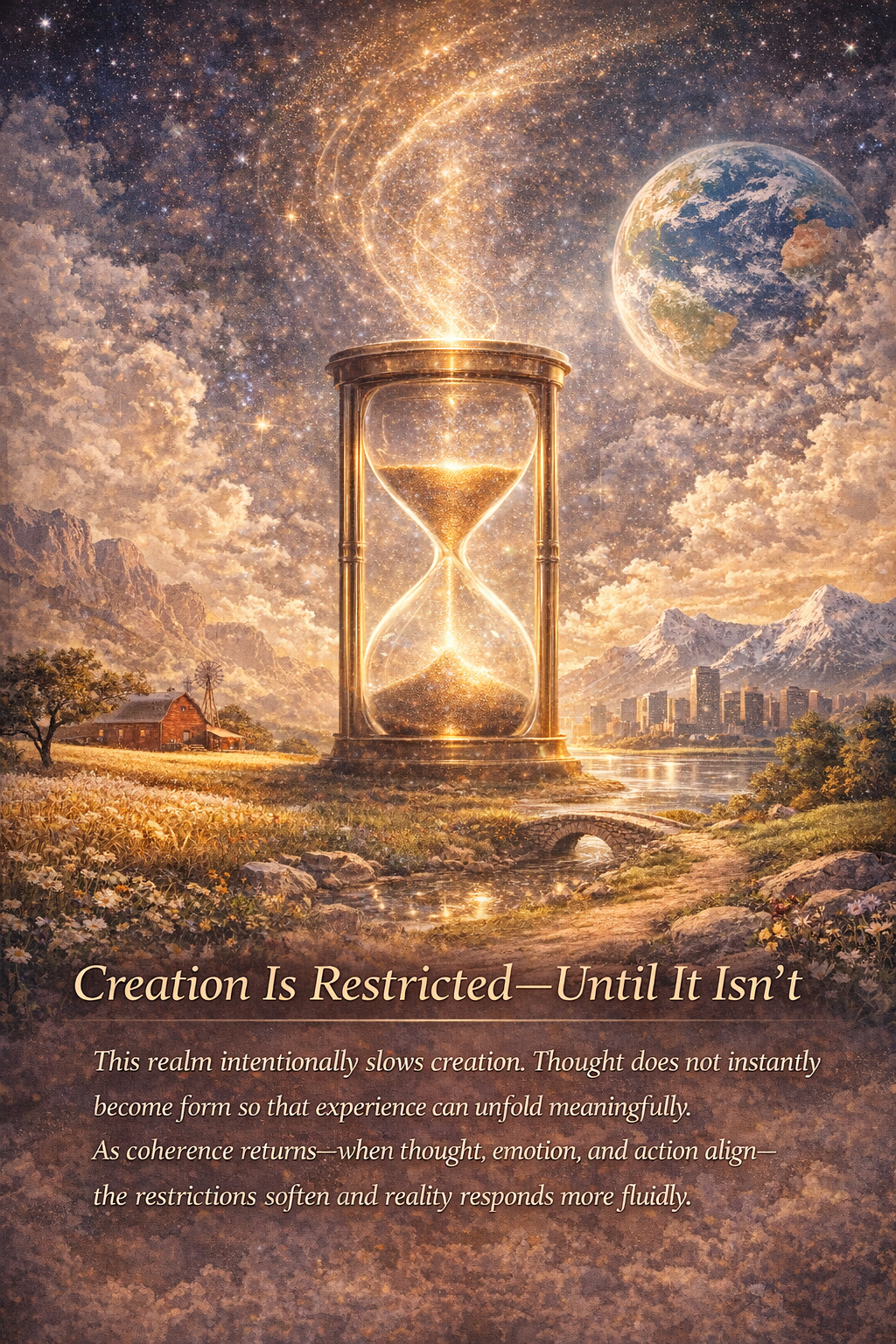
This realm intentionally slows creation. Thought does not instantly become form so that experience can unfold meaningfully. As coherence returns—when thought, emotion, and action align—the restrictions soften and reality responds more fluidly.
7. Control Tightens When Love Is Forgotten
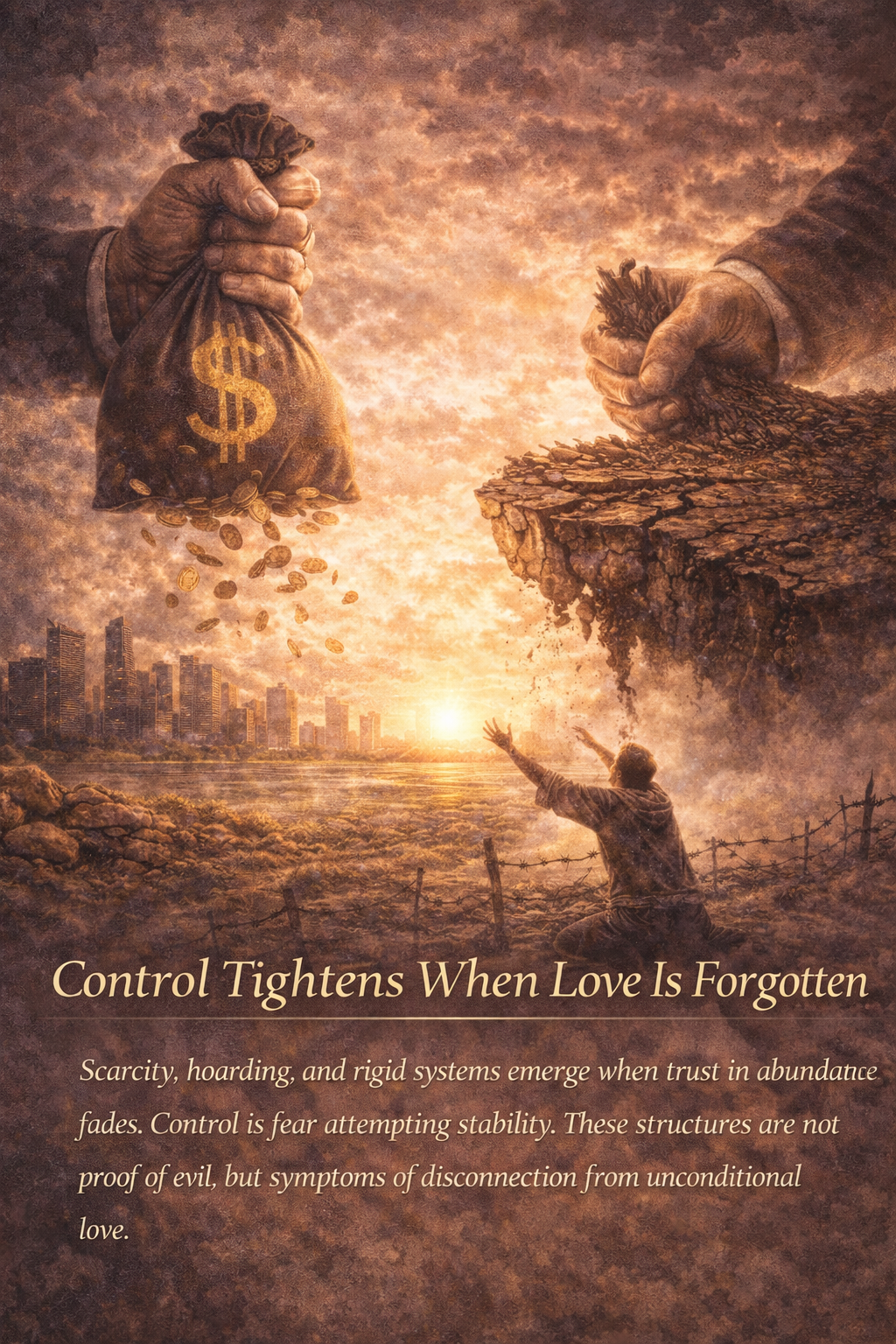
Scarcity, hoarding, and rigid systems emerge when trust in abundance fades. Control is fear attempting stability. These structures are not proof of evil, but symptoms of disconnection from unconditional love.
8. There Is No “Them”
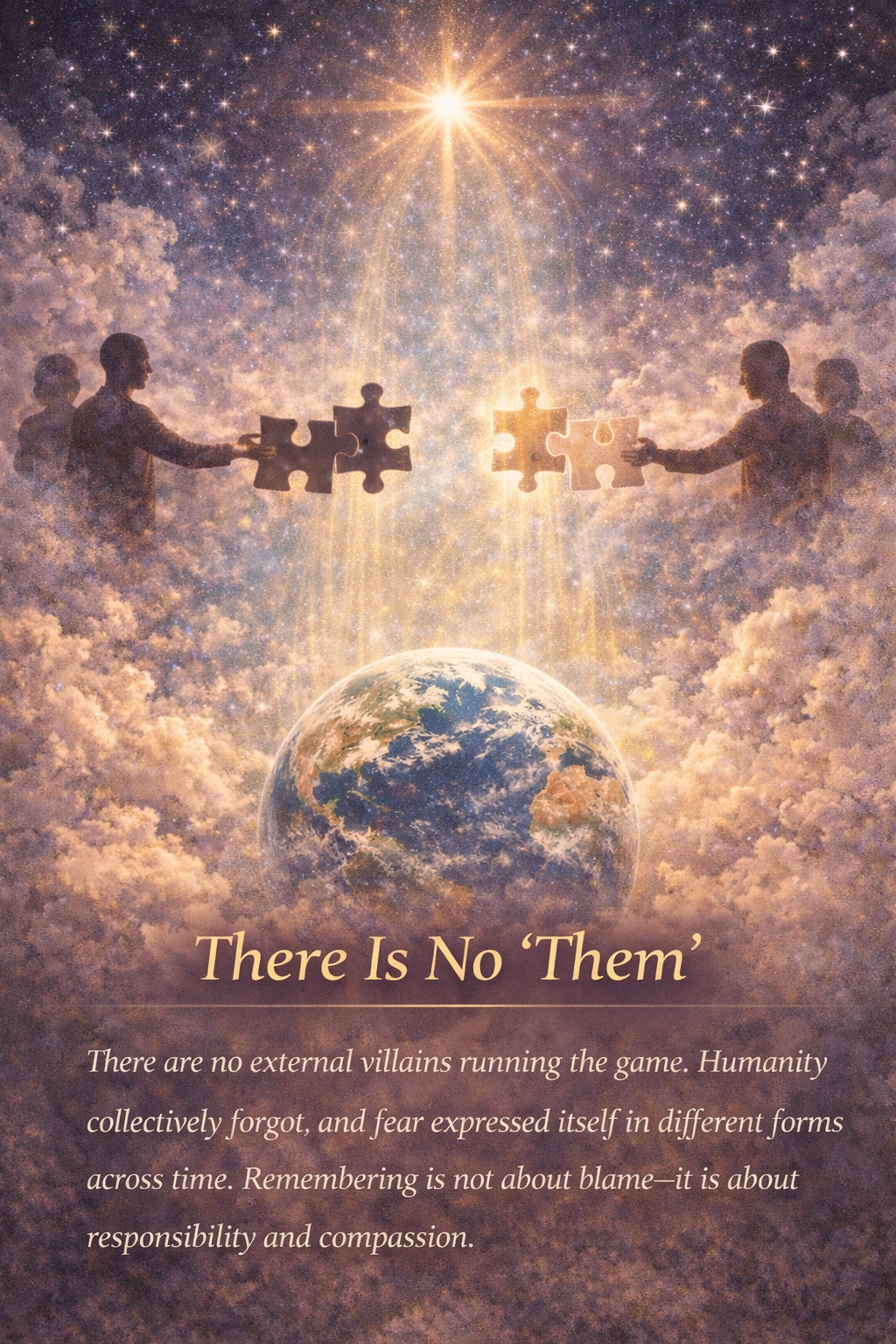
There are no external villains running the game. Humanity collectively forgot, and fear expressed itself in different forms across time. Remembering is not about blame—it is about responsibility and compassion.
9. You Were Never Meant to Be a Slave
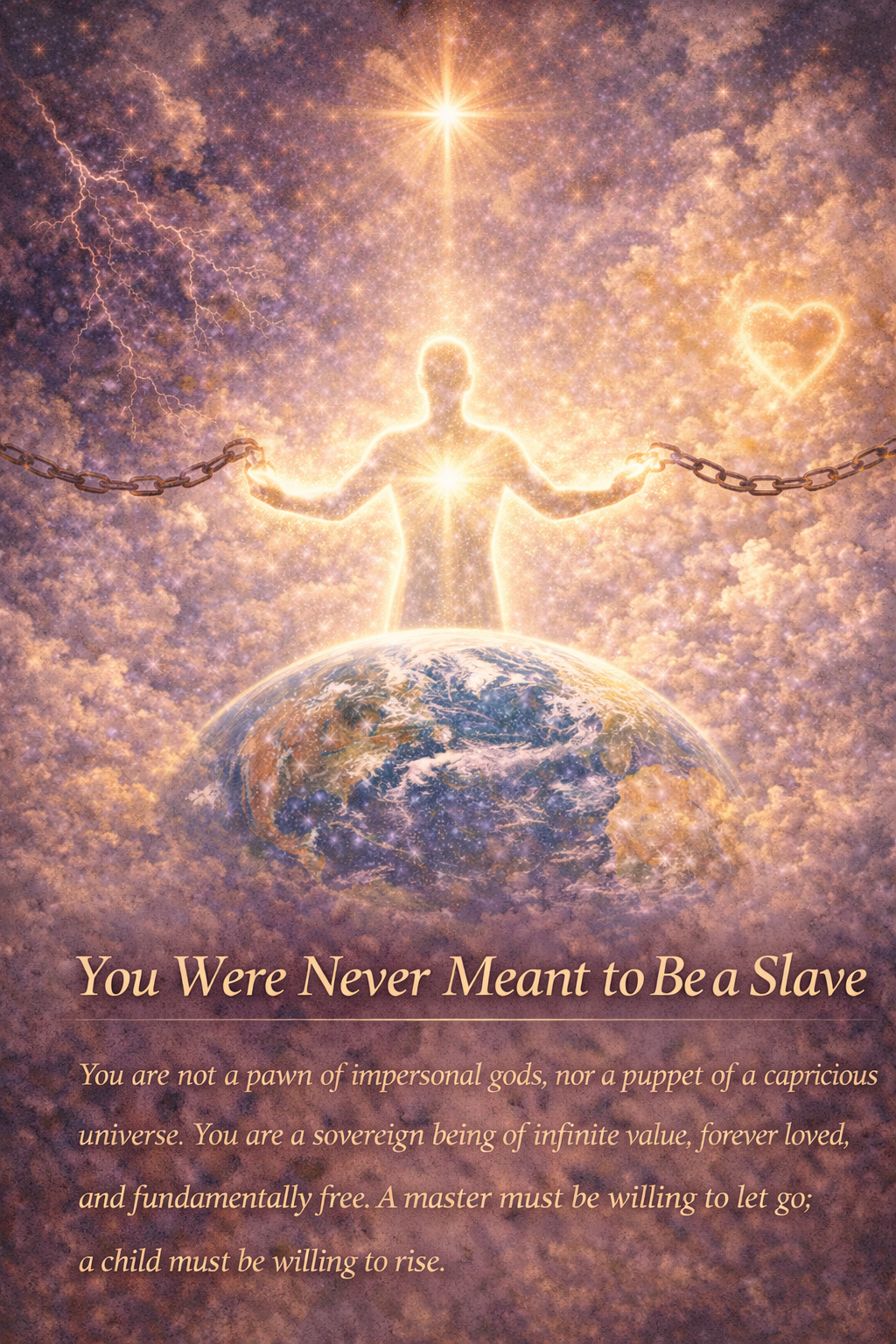
No being incarnates to be owned. Energy, land, and food were originally expressions of shared abundance. Their restriction is a distortion of the game, not its purpose—and distortions dissolve as remembrance spreads.
10. Play Changes Everything
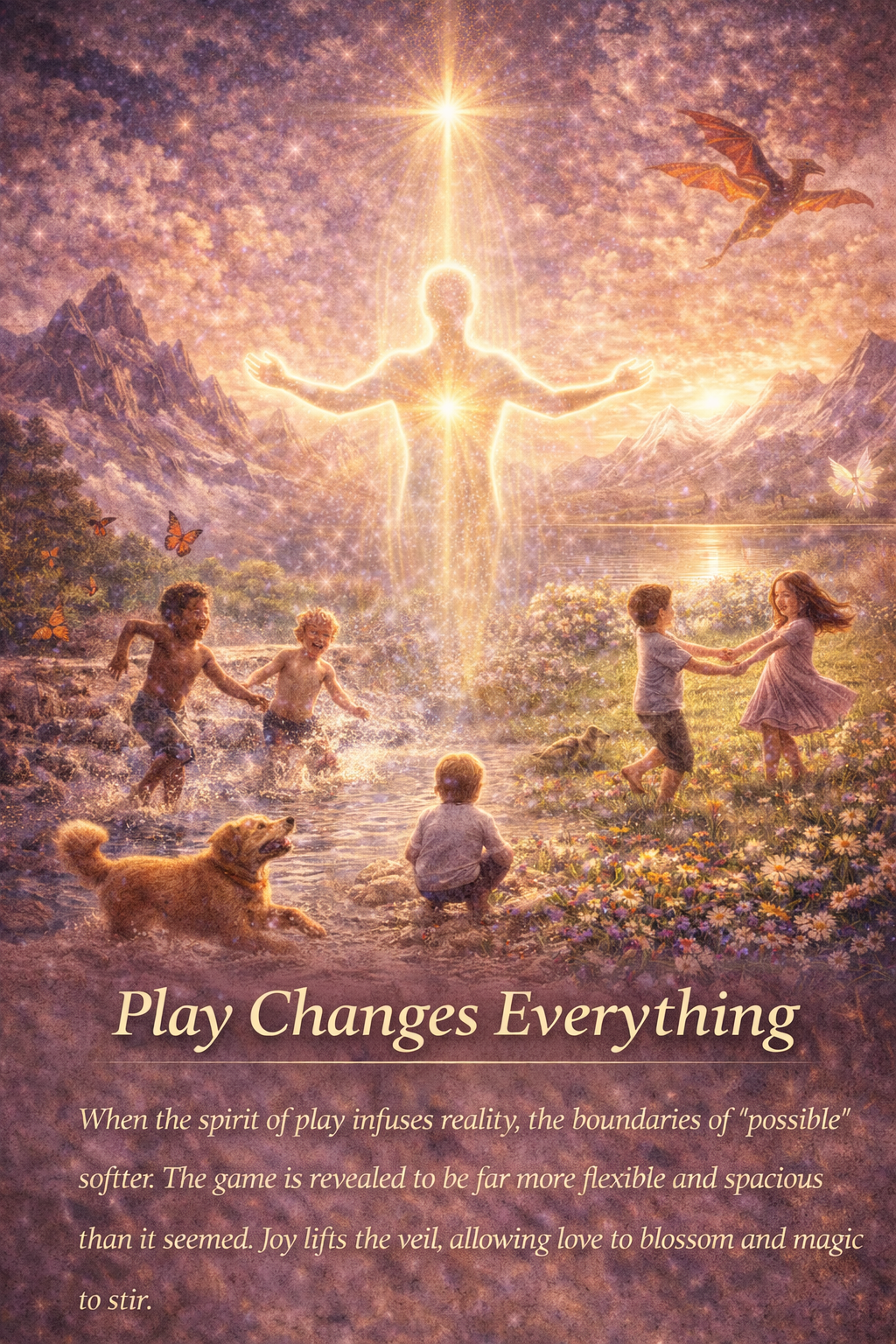
Playfulness signals safety. When life is approached as play, creativity returns and outcomes loosen their grip. Play does not remove care—it removes fear-based seriousness that contracts reality.
11. Awakening Is Relaxation
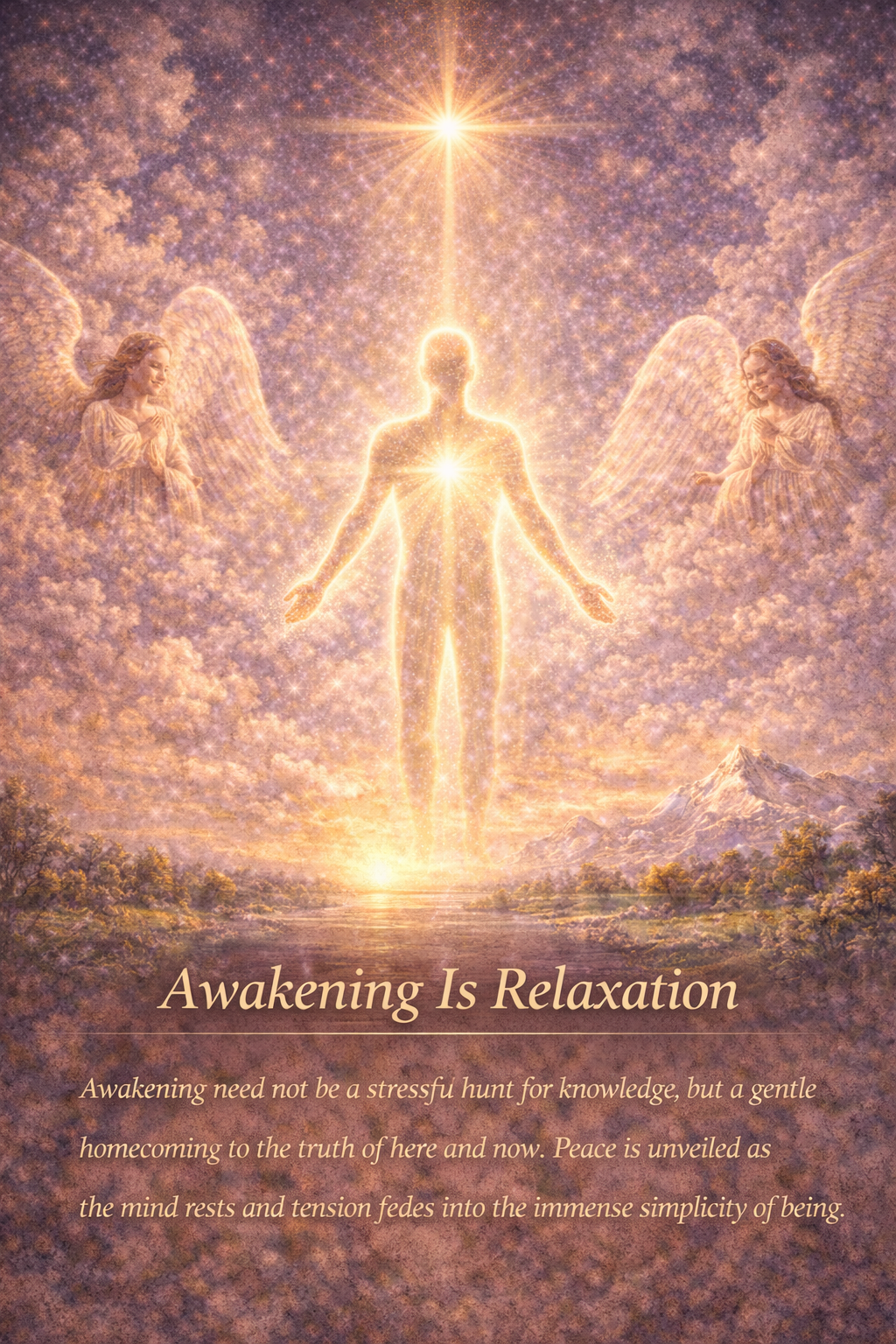
Awakening is not striving, achieving, or becoming special. It is the release of tension and false identity. You don’t rise into truth—you settle back into it.
12. You Don’t Win the Game

There is no final score, judgment, or hierarchy. The value is in experience itself. Winning is a concept created by fear; experiencing is the actual purpose.
13. Love Is the Default State

Love is not something you must generate or sustain. It naturally emerges when fear is absent. Remove fear, and love remains—quiet, stable, and unmistakable.
14. You Don’t Leave the Game When You Remember
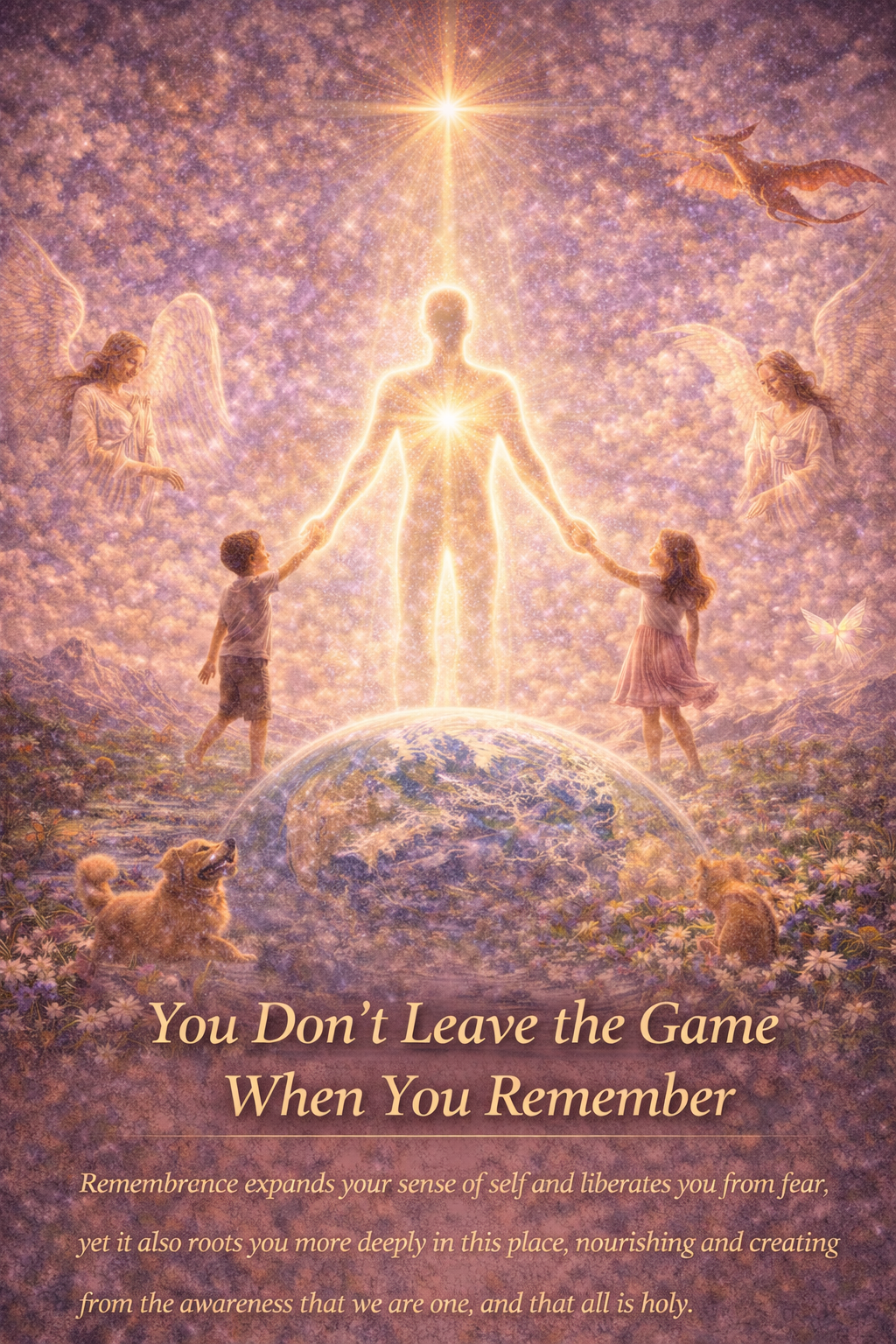
Remembering doesn’t remove you from life—it brings you fully into it. You still experience contrast, emotion, and choice, but without panic or attachment to outcome.
15. The Only Rule That Matters

Remember who you are. Make the most of the experience. And never take it too seriously. When you forget this, the game feels heavy. When you remember, it becomes meaningful—and even joyful.