
What are psychological operations (psyops)?
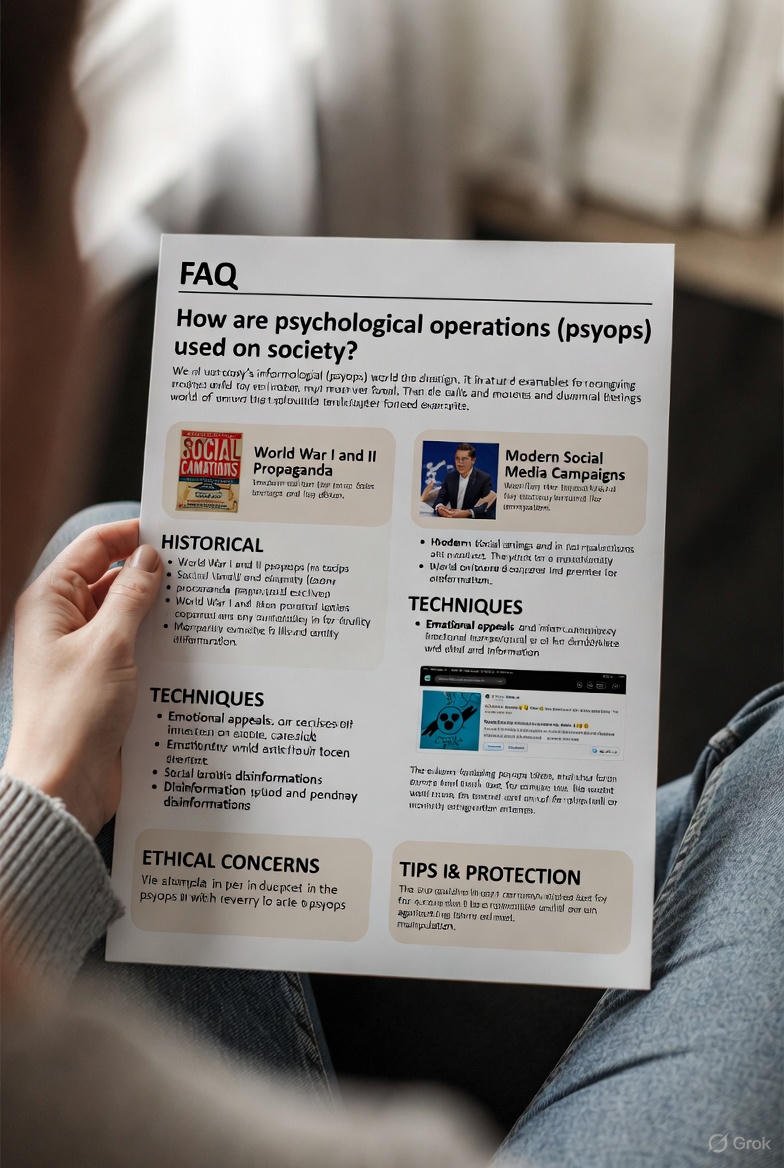
Psychological operations, or psyops, are planned efforts to influence the emotions, motives, reasoning, and behavior of target audiences through propaganda, misinformation, media manipulation, and other non-kinetic methods. While often associated with military contexts, psyops techniques are also employed by governments, corporations, and other entities to shape public opinion, build support, or sow division in civilian societies.
Who uses psyops on society?
Psyops are primarily used by militaries and governments, but similar techniques are adopted by corporations (e.g., public relations campaigns), political groups, and non-state actors. Historical examples include state propaganda ministries during wars, while modern uses involve social media influence campaigns by nations like the US, Russia, China, and others.
What are common techniques used in psyops on society?
Techniques include:
- Propaganda leaflets, radio broadcasts, or posters to demoralize or persuade.
- Media manipulation, such as planting stories or using social media to amplify narratives.
- Disinformation (spreading false information) or gray propaganda (ambiguous sourcing).
- Emotional appeals like fear, anger, or national pride.
- Leaflet drops, loudspeaker announcements, or digital ads to encourage specific behaviors. In modern times, social media platforms enable rapid dissemination of doctored images, fake accounts, or algorithmic amplification of divisive content.
Are psyops used on a government’s own population?
Most military psyops doctrines prohibit targeting domestic audiences, but exceptions exist for disaster relief or public information during crises (e.g., US Civil Authorities Information Support). Historically, governments have used propaganda-like techniques domestically, such as wartime morale-boosting campaigns or public health messaging. Critics argue some influence operations blur lines, but direct military psyops on citizens are rare and often restricted by law.
What are historical examples of psyops affecting society?
- World War I and II: Extensive use of leaflets, radio, and posters by all sides to influence enemy civilians and troops, including demoralization campaigns.
- Cold War: US and Soviet propaganda via radio (e.g., Radio Free Europe) and media to sway public opinion in neutral or opposing countries.
- Vietnam War: Leaflet drops and broadcasts to encourage defections; also civic action programs to win “hearts and minds” among civilians.
- Gulf War (1991): Loudspeaker operations and leaflets convinced thousands of Iraqi soldiers to surrender.
What are modern examples of psyops on society?
- Social media campaigns during conflicts (e.g., doctored photos in Syrian Civil War or Ukraine).
- State-sponsored influence operations on platforms to regulate foreign propaganda or shape global opinion (involving US, Russia, China).
- Counter-ISIS efforts using digital messaging to weaken recruitment and morale.
- Algorithm-driven content amplification leading to societal division for engagement or political goals.
How do corporations use psyops-like techniques on society?
Corporations employ similar methods through advertising, public relations, and lobbying to influence consumer behavior and public opinion. Examples include campaigns to downplay health risks (historical tobacco industry doubt-sowing) or shape perceptions on issues like climate change. These are not formal military psyops but use persuasion tactics like selective data, emotional appeals, and media placement.
Are psyops effective on society?
Psyops can influence behavior, as seen in surrender rates from leaflet campaigns or shifts in public opinion during conflicts. However, effectiveness varies; overreach can backfire, leading to distrust. Modern digital psyops amplify reach but also face countermeasures like media literacy.
What are the ethical concerns with psyops on society?
Key issues include manipulation of free will, erosion of trust in information, societal division, and potential infringement on civil liberties. When used domestically or covertly, it raises questions about transparency and democracy. International norms and laws often restrict psyops to foreign audiences.
How can individuals protect themselves from psyops influences?
Develop critical thinking: Verify sources, question emotional triggers, seek diverse viewpoints, and use fact-checking tools. Awareness of common techniques like repetition, urgency, or us-vs-them framing helps resist manipulation.
This FAQ draws from historical and documented uses of psyops to promote understanding of influence operations in society.