
What is the true purpose of prayer according to Jesus?
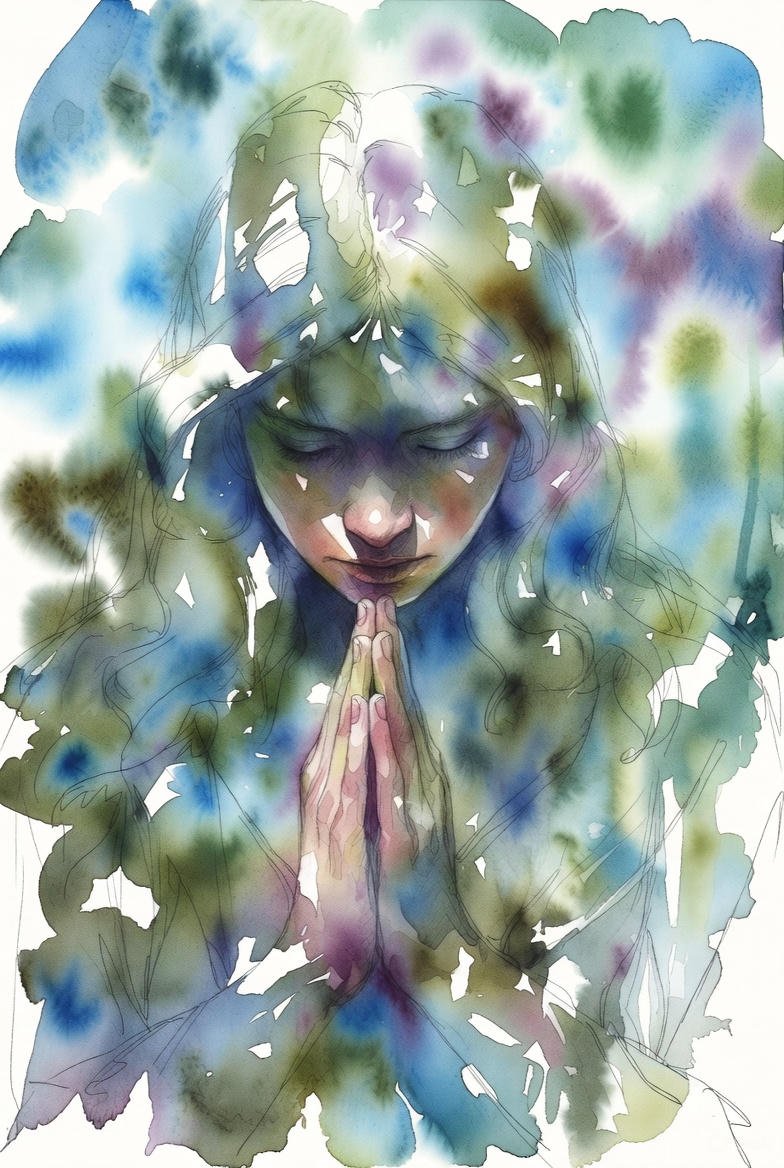
Jesus taught that prayer is not primarily about sending requests to a distant God or asking for external favors. Instead, it is direct inner access to the Father—turning awareness inward to recognize and align with the divine presence already within you. Prayer becomes a practice of remembrance, presence, and inner activation rather than petition.
What did Jesus really mean in John 16:23 when he said, “You shall ask me nothing”?
Jesus was telling his disciples to stop praying to him as an intermediary. He redirected them to address the Father directly: “Whatever you ask the Father in my name, He will give it to you.” This removes all mediators—including Jesus himself—from prayer, emphasizing unmediated, personal connection with God.
What does “pray in my name” actually mean?
The Greek word for “name” (onoma) refers to nature, character, or authority. Praying “in my name” means aligning with the same state of consciousness Jesus embodied—unity, presence, and inner peace—rather than using it as a verbal formula or magical phrase attached to requests.
What did Jesus mean when he said “the kingdom of God is within you” (Luke 17:21)?
He meant it literally: the Kingdom is an internal reality, not a future external event or symbolic community. The original Greek translates as “inside you” or “within you.” Jesus repeatedly pointed to an inner divine presence that is already here, not something to wait for.
Why did Jesus say to pray “in your closet” and “in secret” (Matthew 6:6)?
The “closet” and “door” are not literal. They symbolize withdrawing from external distractions and sensory input—turning attention inward through silence and stillness to connect with “your Father who is in secret.” This describes contemplative, inner prayer.
What does the Bible mean when it says “you are the temple of God”?
Verses like 1 Corinthians 3:16 and Matthew 6:22 (“if your eye is single, your whole body will be full of light”) point to the body—and specifically the brain—as the true temple. The divine presence dwells within, in an inner “Holy of Holies,” accessible through focused inner awareness.
Why do many churches teach prayer as external requests to a distant God?
After Christianity became the state religion of Rome in the 4th century, institutional authority required hierarchy and mediation. Direct inner access threatened that structure, so teachings about the inner Kingdom and unmediated prayer were de-emphasized in favor of external rituals, clergy mediation, and dependency.
Did early Christians practice prayer differently from modern churches?
Yes. Early Christian mystics and contemplatives practiced silent, inward prayer—using stillness, breath, and focused attention—often daily. This inner practice aligned with Jesus’ teachings and produced experiential peace, rather than relying solely on spoken petitions or liturgical rituals.
Why don’t most churches emphasize that the Kingdom is already within us?
Direct access undermines the need for institutional gatekeepers, priests, or hierarchical control. Once people realize they don’t need mediators to reach God, the power dynamic of organized religion shifts dramatically.
Is it biblical to stop praying to Jesus?
According to John 16:23, Jesus himself instructed his followers not to pray to him but to the Father directly. Many modern practices of praying to Jesus developed later and appear to contradict his own words.
Can science support this inner approach to prayer?
Modern neuroscience shows that practices of inner silence, stillness, and focused awareness shift the brain into coherent, restorative states associated with deep peace, clarity, and well-being—matching biblical descriptions like “the peace that passes understanding.”
If the Kingdom is within, why do we still suffer or feel separate from God?
The suffering comes from forgetting or ignoring the inner reality—living externally focused on distraction, fear, and separation. Jesus’ teaching invites us to remember and return to that inner presence through practice, not belief alone.
How can I start experiencing prayer this way?
Begin with short periods of silence: sit quietly, focus on your breath, gently turn attention inward, and release external thoughts. Over time, this cultivates the inner awareness Jesus described—no requests needed, just presence.