
What does “The Architecture of Control” mean?
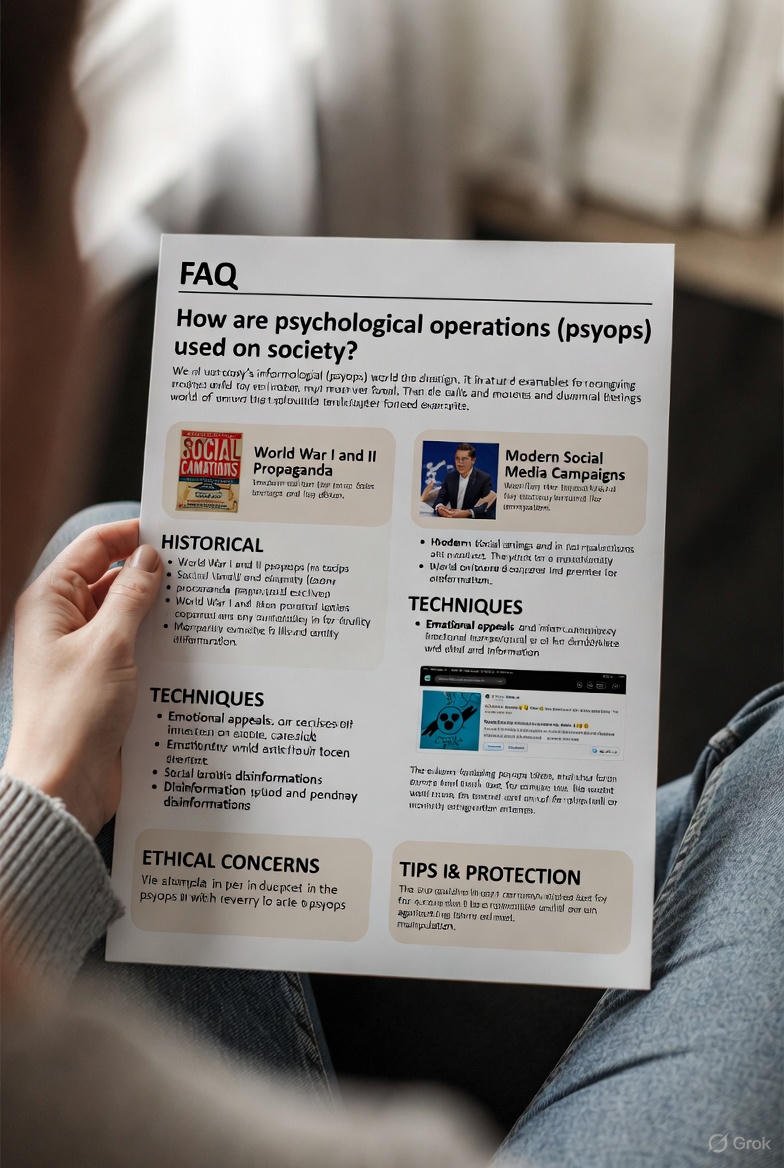
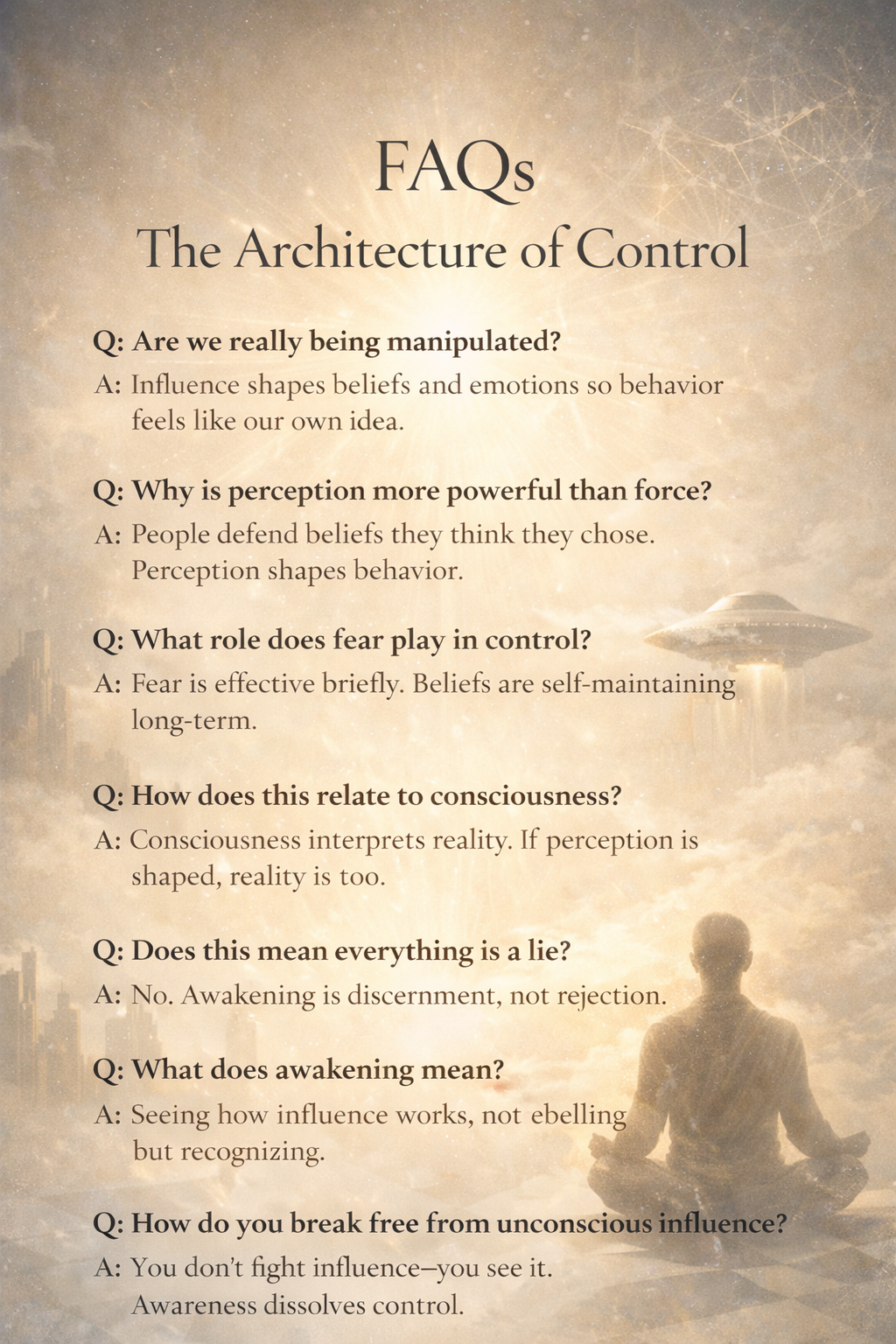
It refers to the invisible systems that shape how we think, feel, and perceive reality. Rather than controlling people through force, modern control operates through influence—shaping beliefs, emotions, identity, and attention so behavior follows naturally.
Are we really being manipulated?
Not in a cartoonish or conspiratorial way—but subtly and constantly. Advertising, media narratives, algorithms, social norms, and emotional triggers all influence perception. Most influence works best when it feels like our own idea.
If this influence exists, do we still have free will?
Yes—but free will requires awareness. When beliefs and reactions go unquestioned, choices are often automatic. Awareness restores agency by allowing you to pause, reflect, and consciously choose instead of react.
Why is perception more powerful than force?
Because people will defend beliefs they think they chose. Force creates resistance. Perception creates alignment. When attention, emotion, and identity are shaped, behavior follows without coercion.
What role does fear play in control?
Fear is effective short-term but unstable long-term. The strongest control doesn’t rely on fear—it relies on identity. Once people adopt a belief as part of who they are, control becomes self-maintaining.
How does this relate to consciousness?
Human experience is not objective reality—it’s a mental model created by the brain. Consciousness interprets and assigns meaning to information. If perception can be shaped, then experienced reality can be shaped as well.
Is reality “fake” or a simulation?
The post doesn’t claim reality is fake, but suggests that reality is filtered. What we experience is not raw reality—it’s interpretation. Whether you call it a simulation, construct, or model, the key insight is that consciousness plays a participatory role.
Does this mean everything is a lie?
No. It means discernment matters. Some narratives are true, some are partial, and some are engineered. Awakening isn’t rejecting everything—it’s learning how meaning is created and deciding for yourself what resonates.
What does awakening actually mean?
Awakening is recognition. Seeing how influence works. Observing your own emotional reactions. Questioning inherited beliefs. It’s not rebellion—it’s clarity.
How do you break free from unconscious influence?
You don’t fight it—you see it.
Ask:
- Why does this trigger me?
- Where did this belief come from?
- Who benefits if I accept this as truth?
Awareness dissolves unconscious control.
Is this about politics, media, or spirituality?
It’s about all of them, but not limited to any. The principles of influence apply everywhere—culture, religion, economics, identity, and even personal relationships.
What’s the takeaway?
You are not a passive observer trapped inside reality. You are an active participant in how reality is experienced. The moment you recognize that, influence loses its grip—and choice returns.